How to split group expenses fairly: equal, by items, percentages, or custom shares
The four ways to split group expenses, when each one is fairest, and how to log and settle everything from a group chat instead of a spreadsheet.
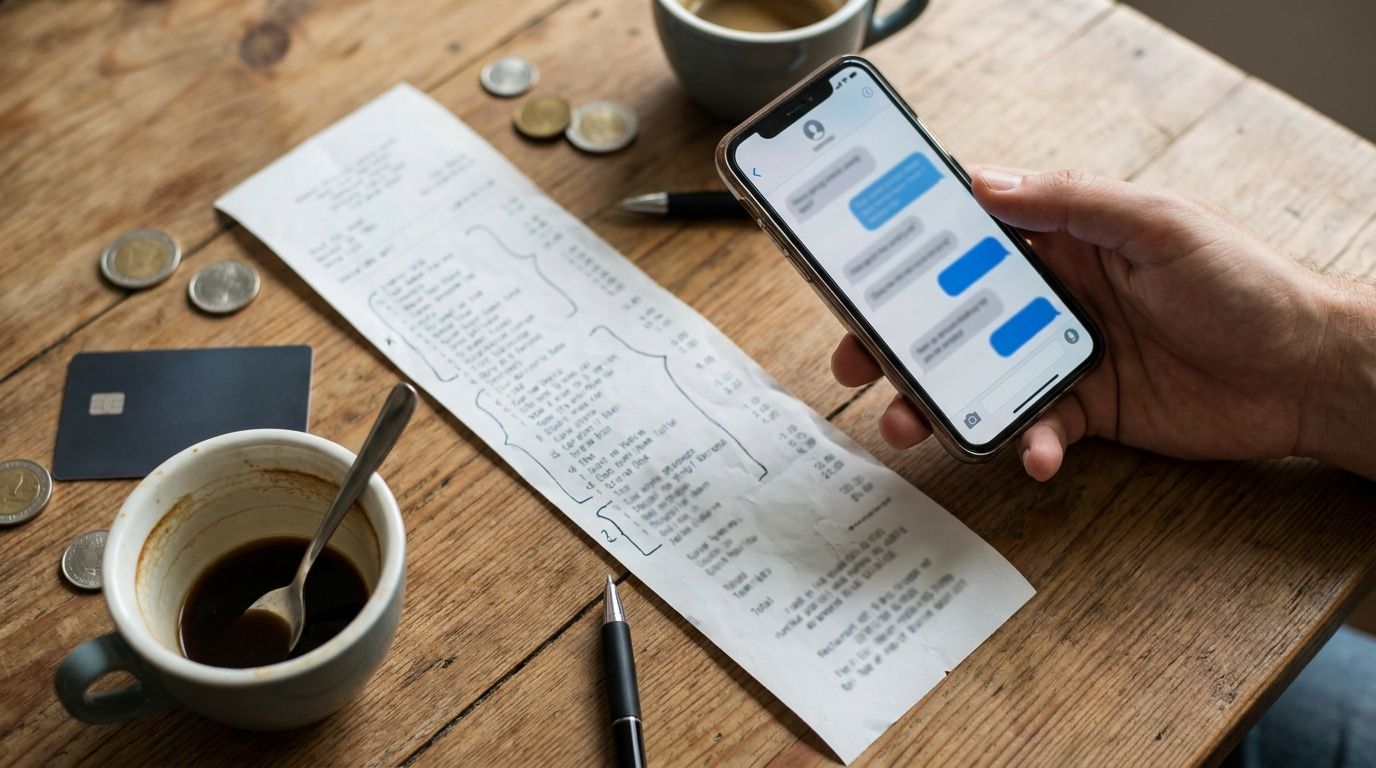
Every group has one moment where the money gets awkward. The dinner bill arrives, or the holiday house needs booking, or the electricity bill lands, and somebody has to decide how to split it. Split it wrong and nobody says anything, but everybody remembers.
The good news is that there are really only four ways to split a group expense, and picking the right one takes seconds once you know what each is for. This guide covers all four, when each one is the fair choice, how to split a bill unevenly without anyone feeling shortchanged, and how to run the whole thing from a group chat instead of a spreadsheet.
The short answer
To split group expenses fairly, match the method to the cost. Split equally when everyone shared the thing roughly the same way, like a taxi or a holiday rental. Split by items when consumption differed, like a restaurant bill where one person had three cocktails.
Use percentages or shares when people should carry different weights by agreement, like couples versus solo travelers or very different incomes. Use custom amounts when someone has already agreed to pay a specific figure. Then log every expense the moment it happens in a shared tracker everyone can see, and settle up in the fewest possible transfers at the end.
The four ways to split, and when each one is fair
1. Split equally
The default, and rightly so. Everyone selected pays the same amount. It is the fair choice whenever the group consumed the thing together and roughly evenly: accommodation, the rental car, groceries for the shared fridge, a pizza order everyone ate from. It is also the cheapest method socially, because nobody has to itemize anything.
Where it breaks: recurring situations where the imbalance repeats. One uneven dinner is fine. Ten dinners where the same person orders twice as much stops being fine around dinner four.
2. Split by items
Each line on the bill goes to the person who ordered it, and shared lines get divided among whoever shared them. This is the fair method for restaurant bills with big gaps in what people ordered, for supermarket runs where half the basket was one person's snacks, and for any bill that includes someone who does not drink.
By-item splitting has a reputation for being fiddly, which it earned in the era of passing a paper receipt around the table. With a receipt photo and an app that reads the line items for you, it takes about thirty seconds, and it removes the single most common source of quiet resentment in group spending.
3. Percentages or shares
Everyone pays a fixed proportion that the group agreed in advance. Percentages and shares are the same idea at different levels of formality: 50/25/25 is percentages, and "the couple counts as two shares, each solo traveller as one" is shares or weights.
This is the fair method for structural differences that apply across many expenses: couples versus singles on a trip, roommates with very different room sizes, partners with very different incomes, families where the kids count as half.
The one rule: agree the ratio out loud before the spending starts, never during. A percentage negotiated over an open bill feels like an accusation.
4. Custom amounts
Someone pays an exact figure and the rest is divided however you choose. Use it for the cases the other methods cannot express: "I will put in 100 for the gift and you two cover the rest," a parent subsidising a family trip, or a friend who joined for one night of a week-long rental.
Custom amounts are the escape hatch, not the default. If you find yourselves hand-typing amounts on every expense, the group actually wants percentages or shares and has not said so yet.
| Method | Fairest when | Watch out for |
|---|---|---|
| Equal | Everyone shared the cost roughly evenly: rent, taxis, group dinners without big gaps | Repeated small imbalances that add up over time |
| By items | Consumption differed: restaurant bills, mixed shopping baskets, drinkers and non-drinkers | Only worth the extra minute on bills where the gap is real |
| Percentages or shares | Structural differences agreed up front: couples vs singles, incomes, room sizes | Agree the ratio before the spending starts, not during |
| Custom amounts | One-off arrangements with an exact figure attached | If every expense needs one, you really want shares |
For a one-off restaurant bill, you do not even need an app: our free bill split calculator runs in the browser and splits evenly or by items, with tax and tip shared in proportion to what each person ordered.
How to actually run it from a group chat
Knowing the methods is half the job. The other half is logging expenses the moment they happen, because a split method cannot save you if half the costs were never written down. The trick is to make logging so fast that it survives real life, which is why doing it inside a group chat works: everyone is already there.
In HippoSplit, a group expense tracker built around a shared chat, adding an expense takes about as long as sending a text, in one of two ways:
- Type it: "lunch 24.50 split with Anna and Ben" straight into the group chat, and it becomes a logged, split expense.
- Post the receipt: photograph it and drop it into the chat, like sending a picture to friends. HippoSplit reads the items, amounts, and currency, picks a category, and splits it across the group. This is the easiest way to keep track as you spend, and it is what makes by-item splitting practical, because the line items are already there to assign. Our receipt scanning tutorial shows each step with screenshots.
Whichever way an expense goes in, you choose the split method per expense: equally, by items, by percentages or shares, or custom amounts. Anything the AI reads from a receipt stays fully editable, and the totals, balances, and settlement math are computed by HippoSplit's backend rather than guessed, so the numbers hold up when someone checks them.
You can also teach each group its own rules once instead of restating them on every expense. Every group has an AI instructions box in its settings: write plain-language rules like "split hotels 60/40", "split groceries by items", or "Mike covers all restaurant bills", and the AI follows them whenever it logs an expense from a typed message or a receipt photo.
This turns the agreements from method 3 into something you set once: write the ratio down, and every matching expense splits that way until you change it.
At settle-up time, simplified payments collapse the web of who-owes-who into the fewest transfers that clear every balance. Six people paying each other back individually can mean a dozen transactions; simplified payments usually get it down to a handful.
The fairness rules that prevent arguments
- Fairness means matching the split to who benefited, not finding one clever formula for everything. Most groups end up using two or three methods side by side, and that is the system working.
- Decide the method before the money is spent, especially for percentages and shares. Rules agreed in advance feel like rules; rules proposed over an open bill feel personal.
- Only split things among the people who joined them. The friend who skipped the boat trip does not owe for the boat trip.
- Keep the record where everyone can see it. A running balance the whole group watches is administrative; a number one person announces from memory is an ambush. For the conversations around money, who pays and how to follow up, see our group payment etiquette guide.
- Do not let one person become the bank. Spread the paying around so no one is carrying the group's cash flow all month.
Frequently asked questions
What is the fairest way to split group expenses?
Split shared costs equally and uneven costs by items, and reserve percentages or shares for structural differences the group agreed in advance. Fairness is about who benefited from each cost, so the fairest system is usually a mix of methods rather than one method applied to everything.
How do you split expenses when incomes are very different?
Use percentages or shares, agreed once and out loud. Many couples split shared bills in proportion to income, for example 60/40, and some friend groups quietly weight big trips the same way. The key is that proportional splitting is a decision the group makes together in advance, not something one person imposes at the till.
How do you split bills unevenly and keep it fair?
Splitting unevenly is the fair choice whenever an even split would not be. Match the method to the reason: split by items when people consumed different amounts, use percentages or shares when the difference is structural and agreed in advance, and use custom amounts for a one-off arrangement. What makes an uneven split land well is rarely the arithmetic. It is that the group heard the reason before the money was spent, so the number arrives as something already agreed rather than as a surprise.
How do you split with someone who joined for part of the time?
Split each expense among the people who were there for it, rather than prorating the whole trip. The friend who came for two nights of a week-long rental pays a custom amount or share for the accommodation, and simply is not included in the dinners they missed. Per-expense selection handles this automatically if you log costs as they happen.
Should you split everything down to the cent?
Track everything, but do not chase everything. Logging costs nothing once it is a habit, and a complete record is what keeps the final balance trustworthy. At settle-up, small rounding is fine to wave off between friends. The distinction that matters: waving off three euros at the end is generosity, while failing to record three expenses is how a sixty euro gap appears from nowhere.
Do you need an app for this?
For a one-off dinner, mental math is fine. For anything ongoing, an app beats a spreadsheet for one structural reason: logging has to happen at the moment of spending, from a phone, by whoever paid. A spreadsheet makes one person the bookkeeper; a shared tracker makes the record everyone's. If your group resists installing apps, pick a tool with guest access via link, so people can join from a browser without signing up. If your group is set on spreadsheets anyway, our free expense-splitting template does the balances and settle-up math for you.
Put it to work on the next bill
Equal for what you shared, by items for what you did not, shares for the differences you agreed up front, and custom amounts for the exceptions. Log as you spend, settle in a few transfers, and the money stops being a topic.
If the next group expense is a trip, our guide to splitting trip expenses with friends covers the travel-specific parts, and we compared the 7 best expense splitting apps in 2026 if you are still choosing a tool. Or start a group in HippoSplit and send your friends the link. They can follow along as guests without signing up, while you try a receipt photo and watch the split appear in the chat.