How much does food cost in Japan? 33 receipts from 11 days
Two people, 11 days, 33 food receipts: what ramen, konbini breakfasts, cafes and a seafood lunch really cost in Japan, and a per-person daily food budget you can copy.
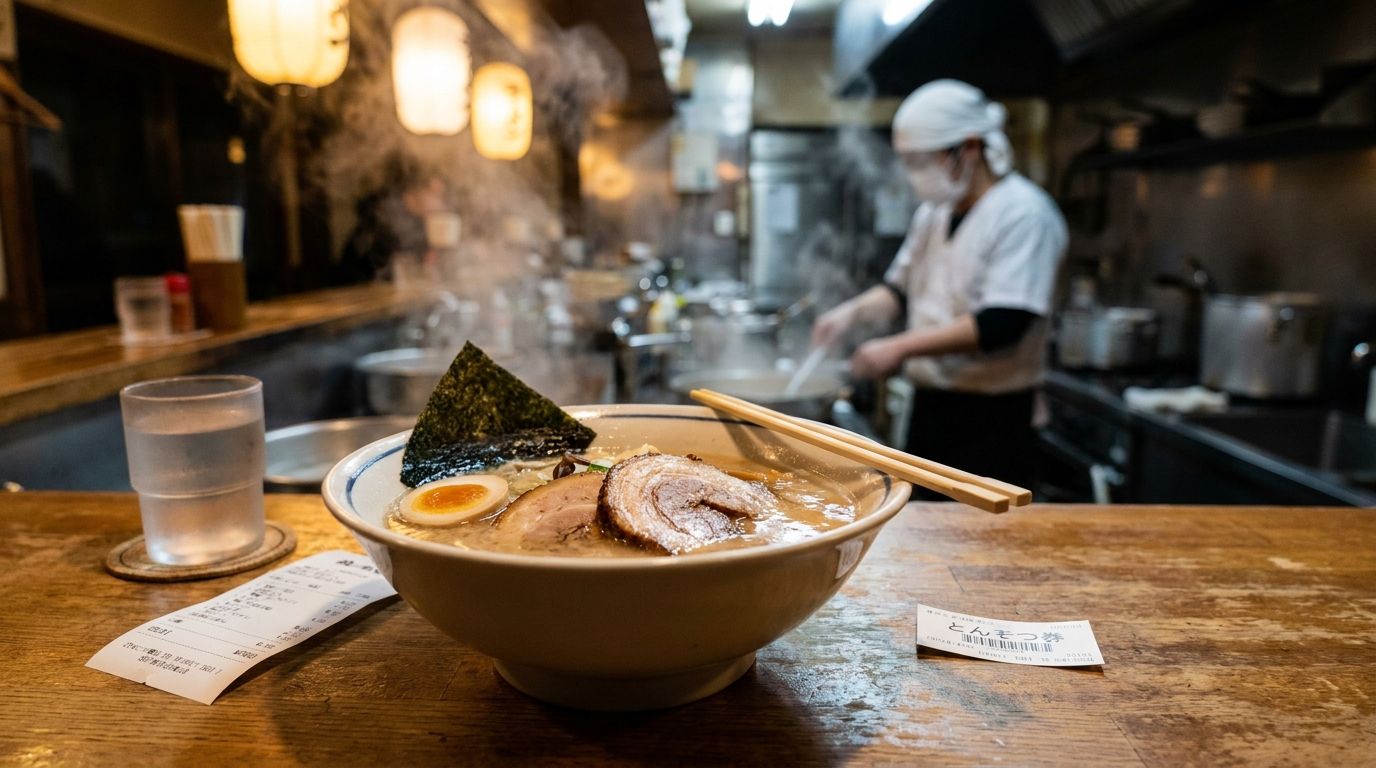
Two of us spent ¥72,354 on food and drink over 11 days in Japan in April 2026, which works out at about ¥3,300 (roughly $21) per person per day. That covered a convenience store breakfast most mornings, one or two restaurant meals a day, cafe stops and a few supermarket runs across Osaka, Kyoto, Tokyo, Mt Fuji and Disneyland.
Every meal was logged from its receipt, so this post can show real prices, line by line, rather than a rough range. It is the food half of our full Japan trip cost breakdown, which covers accommodation, trains and everything else.
How much does food cost in Japan per day? The short answer
Budget about ¥3,000 to ¥4,000 (about $19 to $25) per person per day if you eat the way most visitors do: a convenience store breakfast, one cheap counter meal and one proper sit-down meal. Our actual figure was ¥3,300 a head, and it was not a frugal ¥3,300: it included a ¥7,600 seafood lunch, yakiniku, a steak dinner and a bowl of Ichiran. Eat every meal in a restaurant and you will land nearer ¥5,000 to ¥6,000 a day. Live on konbini food and standing noodle counters and ¥2,000 to ¥2,500 is realistic. The reason Japan feels cheap to eat in is the low end: a filling ramen is ¥1,000 to ¥1,400, a beef bowl at a Matsuya counter is under ¥1,000, and a two-person convenience store breakfast is around ¥1,400. What pushes the average up is choosing a few special meals, not the everyday ones.
| Style of eating | Yen per person per day | About USD |
|---|---|---|
| Konbini and counter meals only | 2,000 to 2,500 | $13 to $16 |
| Our mix: konbini breakfast, one or two restaurants | 3,300 | $21 |
| Every meal in a restaurant, some nicer dinners | 5,000 to 6,000 | $31 to $38 |
USD figures use the April 2026 rate of roughly ¥160 to the dollar and are rounded.
What 33 food receipts add up to
Of the 61 receipts from the trip, 33 were food and drink. Restaurants were 59% of the food money on 12 receipts, and convenience stores were the most frequent stop but only 21% of the spend. The median food receipt for two people was ¥1,852, and 19 of the 33 were under ¥2,000.
| Where we ate | Receipts | Yen (for two) | Average per receipt | Per person per day |
|---|---|---|---|---|
| Restaurants | 12 | 42,771 | 3,560 | 1,940 |
| Convenience stores (konbini) | 11 | 14,987 | 1,360 | 680 |
| Supermarkets | 4 | 7,404 | 1,850 | 340 |
| Cafes and bubble tea | 3 | 4,780 | 1,590 | 220 |
| Disneyland food carts | 2 | 2,200 | 1,100 | 100 |
| Drugstore snack | 1 | 212 | 212 | 10 |
| Total | 33 | 72,354 | 2,190 | 3,290 |
Per person per day is the two-person total divided by 22 person-days. The FamilyMart 200 metres from our Osaka apartment appears six times on its own, which tells you how the konbini habit works: small baskets, often, rather than one big shop.
Convenience store prices in Japan: what a breakfast for two costs
Our first receipt of the trip was breakfast at the Lawson inside Kansai Airport, ten minutes after landing. Two egg sandwiches, two puddings, an orange juice and a bottle of water came to ¥1,470 for two, and that was a typical morning.
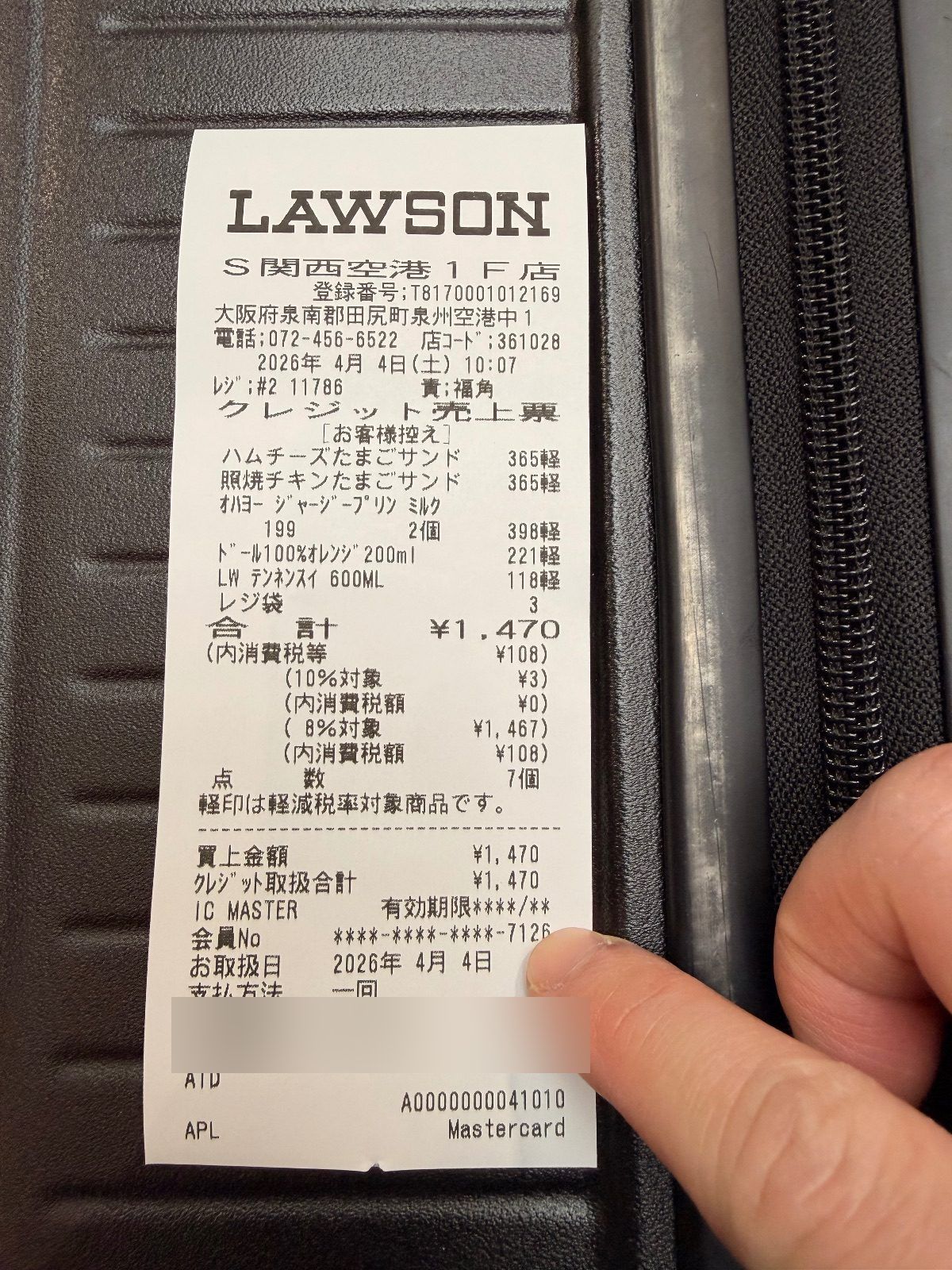
| Item (Lawson, Kansai Airport) | Yen |
|---|---|
| Ham, cheese and egg sandwich | 365 |
| Teriyaki chicken and egg sandwich | 365 |
| Ohayo Jersey milk pudding, 2 | 398 |
| Dole 100% orange juice, 200 ml | 221 |
| Natural water, 600 ml | 118 |
| Plastic bag | 3 |
| Total | 1,470 |
Konbini also covered a couple of dinners. A 7-Eleven run in Sangenjaya on the rainy Kamakura day was ¥1,551 for two: two chicken nanban (¥298 each), two kombu rice balls (¥182 each), a bag of chips, sour cream onion crackers and an unsweetened latte with ¥22 knocked off. That is a full meal for two for under $10. Our 11 konbini food receipts averaged ¥1,360 for two, and the biggest basket of the trip, a late-night FamilyMart stop with instant noodles, curry and fruit, was ¥2,765.
How much does ramen cost in Japan? Three bowls, three receipts
We had ramen three times, at a Dotonbori tonkotsu shop in Osaka, a miso ramen counter in Shibuya and Ichiran in Shinjuku. The receipts put a plain bowl at ¥830 to ¥1,080 and a fully loaded one at ¥1,750, with toppings in ¥110 to ¥160 steps.
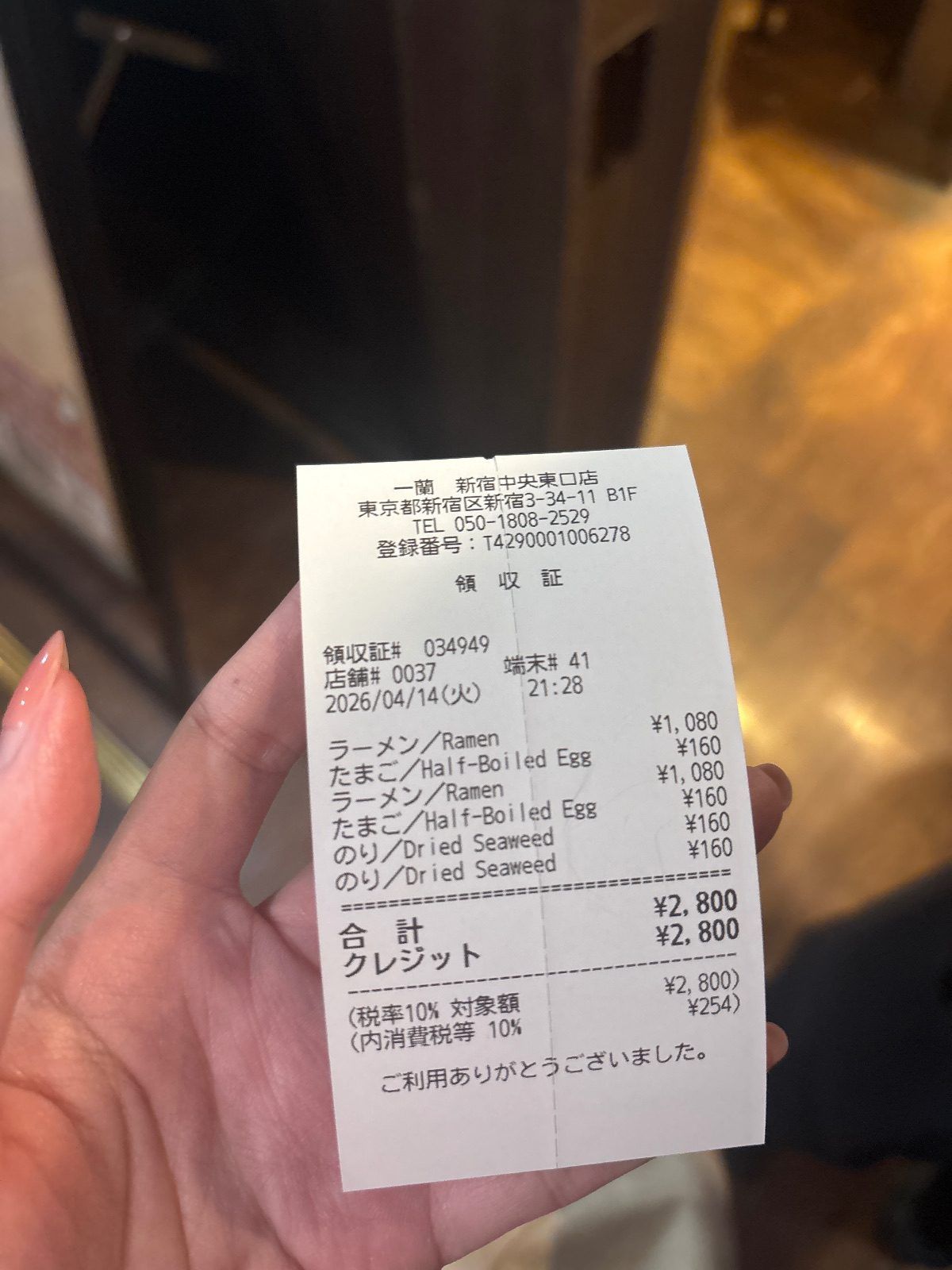
| Ramen shop | What we ordered | Yen for two | Per person |
|---|---|---|---|
| Zundo-ya, Dotonbori (Osaka) | Two all-toppings chashu ramen, thin noodles (¥1,750 each), extra vegetables ¥200 | 3,700 | 1,850 |
| Miso ramen counter, Shibuya Center-gai | Red miso ¥830 and spicy miso ¥880, egg ¥110 each, free large noodles, gyoza and rice set ¥270, two colas ¥400 | 2,600 | 1,300 |
| Ichiran, Shinjuku | Ramen ¥1,080 each, half-boiled egg ¥160 each, nori ¥160 each | 2,800 | 1,400 |
So a realistic ramen budget is ¥1,300 to ¥1,850 a head once you add an egg and a drink. Ordering the everything bowl at Zundo-ya nearly doubled the price of the plain one, which is the pattern across Japan: the base dish is cheap and the extras are where the bill grows.
Restaurant prices in Japan: from a ¥1,810 counter to a ¥7,600 lunch
Twelve restaurant receipts, ranked. Everything is the total for two people, tax included. The cheapest sit-down meal was a Matsuya beef bowl counter in Sangenjaya; the priciest was a seafood lunch near Tsukiji.
| Restaurant | Where | Yen for two | Per person |
|---|---|---|---|
| Matsuya (gyudon counter) | Sangenjaya, Tokyo | 1,810 | 905 |
| Gyoza no Ohsho | Tokyo | 1,852 | 926 |
| Noodle House (pho) | Tokyo Station | 2,500 | 1,250 |
| Burger King | Fujisawa, Kamakura day | 2,580 | 1,290 |
| Miso ramen counter | Shibuya | 2,600 | 1,300 |
| Ichiran | Shinjuku | 2,800 | 1,400 |
| Hungry Bear curry | Tokyo Disneyland | 3,200 | 1,600 |
| Kushikatsu bar (incl. ¥660 otoshi) | Shinsekai, Osaka | 3,360 | 1,680 |
| Zundo-ya ramen | Dotonbori, Osaka | 3,700 | 1,850 |
| Yakiniku Goen | Tamatsukuri, Osaka | 5,225 | 2,613 |
| COCO'S family restaurant | Fuji | 5,544 | 2,772 |
| Kaisen-ya Taneichi (seafood lunch) | Tokyo | 7,600 | 3,800 |
The average restaurant receipt was ¥3,560 for two, about ¥1,780 (roughly $11) a head. The COCO'S dinner near Mt Fuji is a useful calibration for a family restaurant: a thick-cut sirloin steak set was ¥2,390 plus ¥360 for the rice and miso set, a hamburg steak set ¥990 plus ¥360, extra fruit ¥250 and a dessert ¥690, then 10% tax added on top for ¥5,544. That is a steak dinner for two for about $35.
Splitting these with friends is easy when the receipt is itemised: the seafood lunch and the yakiniku were the two bills where who ate what really mattered. If you need the mechanics, we wrote up how to split a restaurant bill by items, tax and tip separately.
Otoshi, tax and the other small print on a Japanese food bill
Otoshi is a seating charge of a few hundred yen per person that arrives as a small dish you did not order. Ours was ¥330 each at the kushikatsu bar in Shinsekai, ¥660 on a ¥3,360 bill. It is normal at izakaya-style places, it is not a scam and it is not a tip; Japan does not tip, so otoshi is roughly where that money goes instead. Fast food, ramen counters and family restaurants do not charge it.
Tax is the other thing that confuses first-time visitors. Food and drink you take away is taxed at the reduced 8% rate; food you eat in is 10%. Convenience store receipts mark reduced-rate items with a symbol, and one order can carry both rates, like the Lawson breakfast above (8% on the food, 10% on the ¥3 bag). Most restaurants print tax-inclusive prices, so the menu price is what you pay; a few family chains, COCO'S among them, add 10% at the bottom. Bags cost ¥3 to ¥7, and small discounts show up often: a ¥22 coupon on a latte, ¥50 off a near-expiry sandwich, ¥20 off at a drugstore.
Cafes, supermarkets and theme park food
Cafe stops were ¥1,260 to ¥1,900 for two: a matcha cafe in Tokyo, a cafe in Kitahama in Osaka and a bubble tea on the last day. Supermarkets were the cheap way to stock the apartment, and the three we used (Seiyu, Daiei and a Seijo Ishii at Tokyo Station) ran ¥1,357 to ¥2,894 a visit for snacks, bentos, fruit and drinks.
Tokyo Disneyland was the one place where food was clearly marked up: curry was ¥1,600 a plate, a juice ¥500 and churros ¥600 each, all paid in cash at carts. Even so, a full park day of food for two was ¥5,400, so it is a premium of maybe 50% over the city, not the several-times markup you see at parks elsewhere.
Food spend day by day
For two people, from the 33 receipts. The quiet days are the travel days; the expensive ones are the days with a special meal.
| Day | Where | Food for two (¥) | Per person (¥) | What we ate |
|---|---|---|---|---|
| Sat 4 Apr | Osaka | 2,374 | 1,187 | Airport Lawson breakfast, FamilyMart dinner after a late arrival |
| Sun 5 Apr | Osaka | 5,445 | 2,723 | FamilyMart breakfast, Zundo-ya ramen in Dotonbori |
| Mon 6 Apr | Osaka | 10,780 | 5,390 | Kitahama cafe, bakery, kushikatsu in Shinsekai, four konbini stops |
| Tue 7 Apr | Kyoto and Osaka | 7,114 | 3,557 | Yakiniku dinner, FamilyMart |
| Wed 8 Apr | Osaka to Tokyo | 2,748 | 1,374 | Travel day: a bottle of water and a Seiyu supermarket run |
| Thu 9 Apr | Tokyo | 12,445 | 6,223 | Seafood lunch, Shibuya miso ramen, FamilyMart |
| Fri 10 Apr | Kamakura and Tokyo | 5,941 | 2,971 | Burger King, Matsuya, 7-Eleven dinner |
| Sat 11 Apr | Tokyo | 5,757 | 2,879 | Matcha cafe, pho at Tokyo Station, Seijo Ishii |
| Sun 12 Apr | Mt Fuji | 8,438 | 4,219 | COCO'S steak dinner, Daiei supermarket |
| Mon 13 Apr | Disneyland | 7,252 | 3,626 | Park curry, juice, churros, Gyoza no Ohsho |
| Tue 14 Apr | Tokyo | 4,060 | 2,030 | Bubble tea, Ichiran before the flight |
| Total | 72,354 | 36,177 | 33 receipts |
How we tracked every meal
Every receipt in this post was photographed at the counter and posted into our trip group in HippoSplit, which I build, the same way you would send a picture to a friend. HippoSplit reads the photo and logs the expense: every line item, the total in yen, a category, and the split across the group. When there was no receipt, one of us typed a message like "lunch 2400 split with Anna" and it logged that too.
That is why this post can quote the price of a half-boiled egg at Ichiran five months later. The itemised receipt is the only record that has the prices, the tax rates and who ate what; a card statement just says ¥2,800. If you travel with friends, the same habit also settles the trip: every meal has a payer attached, so the who-owes-who at the end is already worked out.
Frequently asked questions
How much does food cost in Japan per day?
About ¥3,000 to ¥4,000 ($19 to $25) per person per day for a mix of convenience store breakfasts, a cheap lunch and a proper dinner. Our 11-day figure was ¥3,300 a head. Eating in restaurants for every meal pushes it to ¥5,000 to ¥6,000; living on konbini food brings it down to ¥2,000 to ¥2,500.
How much should I budget for food for a week in Japan?
At our ¥3,300 a day, a week is about ¥23,000 (about $145) per person. Budget ¥28,000 to give yourself one or two special meals, and ¥35,000 to ¥42,000 if you plan to eat out for every meal.
How much does a meal cost in Japan?
From our receipts: a beef bowl at a chain counter ¥905 a head, gyoza and rice ¥926, ramen ¥1,300 to ¥1,850 with toppings and a drink, a family restaurant steak set ¥2,750 with tax, yakiniku ¥2,600, and a seafood lunch ¥3,800 a head. The average restaurant meal across 12 receipts was ¥1,780 (about $11) per person.
How much does ramen cost in Japan?
A basic bowl is ¥830 to ¥1,080 at the three shops we visited, and ¥1,750 for a fully loaded chashu bowl. Toppings are ¥110 to ¥160 each and a drink about ¥200, so most people spend ¥1,300 to ¥1,850 on a ramen meal.
Is convenience store food in Japan cheap?
Yes. A breakfast for two of sandwiches, pudding, juice and water was ¥1,470, and a dinner for two of chicken nanban, rice balls and snacks was ¥1,551. Our 11 konbini food runs averaged ¥1,360 for two people, about ¥680 a head.
Do you tip in Japan?
No. Nobody on the trip tipped and no receipt has a tip line, apart from a ¥500 tip added inside a ride-hailing app. Izakaya-style bars charge otoshi instead, a seating charge of a few hundred yen per person that comes with a small dish; ours was ¥330 each.
Why do Japanese receipts show both 8% and 10% tax?
Food and drink you take away is taxed at the reduced 8% rate; eating in, and almost everything that is not food, is 10%. A convenience store receipt marks the reduced-rate items with a symbol, and a single bill can carry both, such as 8% on the food and 10% on the plastic bag.
How do you split food costs on a group trip to Japan?
Photograph each itemised receipt at the counter and log it with whoever paid, then settle once at the end instead of passing cash around after every meal. Card slips are useless for this because they carry no items, so ask for the itemised receipt. Our guide to working out who owes who after a group trip covers the settle-up step.