How much does a trip to Italy cost in 2026? A real per-person budget for Rome, Florence and Venice
What 10 nights in Rome, Florence and Venice really cost per person in 2026: hotels, trains, food, the new museum and fountain fees, city taxes, the coperto, and how a group splits it.
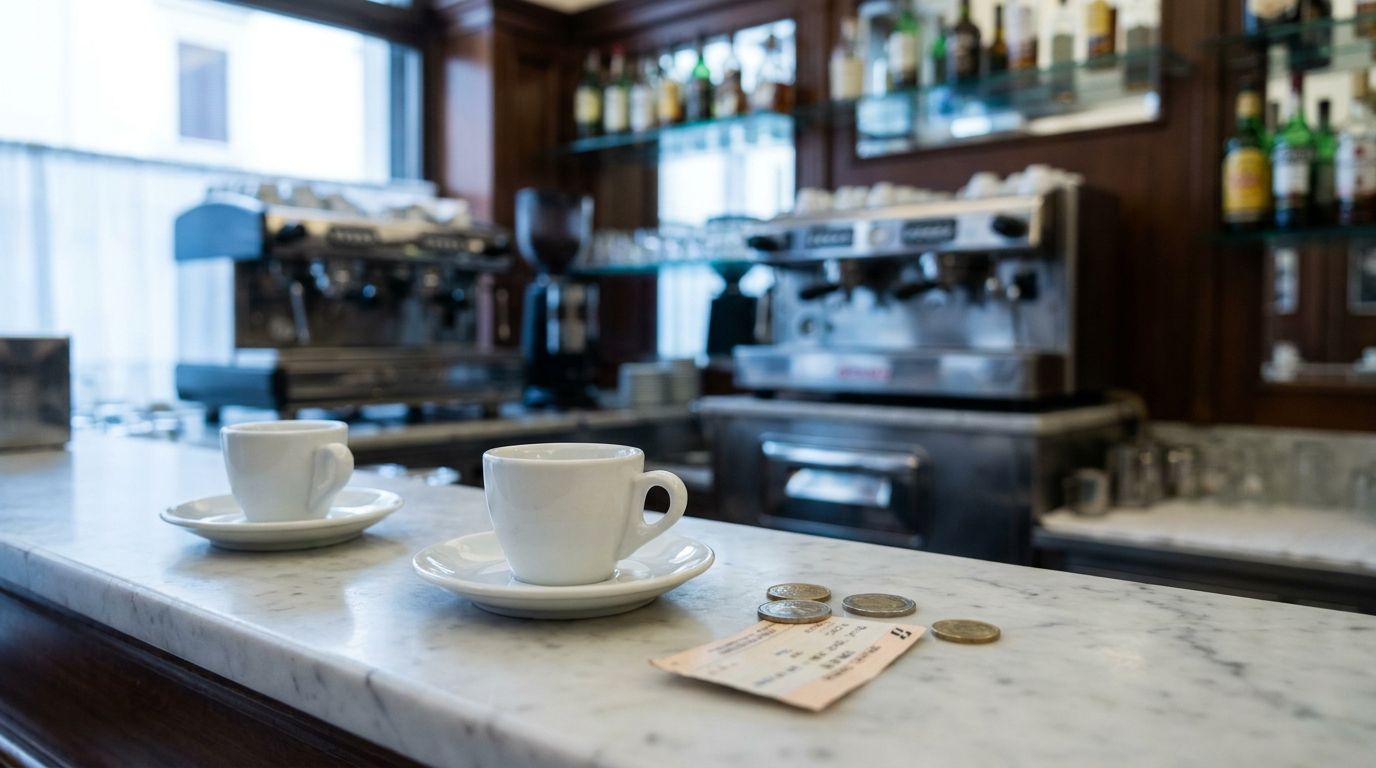
Italy has a reputation as an expensive trip, and parts of it are. A hotel near the Colosseum in June, a gondola in Venice and a table on a famous piazza will all cost what you fear. But a standing espresso is still about a euro and a quarter, a margherita in Rome is often under ten euros, and fast trains between the big cities can cost less than the taxi to the airport.
The total depends far more on where you sleep, when you go and which tickets you book than on what you eat. This post gives a per-person budget for a classic 10-night trip in three tiers, the 2026 fees and charges most guides have not caught up with, and how a group keeps the euros straight.
How much does a trip to Italy cost? The short answer
For 10 nights across Rome, Florence and Venice, budget roughly 1,000 euros per person (about $1,140) on hostels, pizza and advance train fares, about 2,170 euros (about $2,460) for a comfortable mid-range trip with three-star hotels and the big museums booked ahead, and around 5,100 euros (about $5,800) at the premium end. International flights are on top, and from the US they averaged about $850 round trip over the past year, from around $610 in February to around $1,140 in June.
That works out to about $115, $245 and $580 per person per day, all in except the flight to get there. Prices below use the European Central Bank rate of about $1.14 to the euro at the end of September 2026, and were checked in October 2026 for the shoulder seasons, April to May and September to October. In July and August, add 20 to 30 percent to the accommodation line and expect the lines to cost you time instead of money.
The example is a group of four, 10 nights, four in Rome, three in Florence and three in Venice, flying into Rome and home from Venice, sharing rooms two to a room:
| Per person, 10 nights | Budget | Balanced | Premium |
|---|---|---|---|
| Accommodation | 400 EUR (~$455) | 800 EUR (~$910) | 1,750 EUR (~$1,985) |
| City tourist taxes | 35 EUR (~$40) | 55 EUR (~$60) | 65 EUR (~$75) |
| Food and drink | 300 EUR (~$340) | 750 EUR (~$850) | 1,700 EUR (~$1,930) |
| Trains and airport transfers | 70 EUR (~$80) | 140 EUR (~$160) | 400 EUR (~$455) |
| City transport and water buses | 60 EUR (~$70) | 75 EUR (~$85) | 250 EUR (~$285) |
| Museums, sights and tours | 100 EUR (~$115) | 280 EUR (~$320) | 800 EUR (~$910) |
| SIM, laundry, ATM fees, small stuff | 35 EUR (~$40) | 70 EUR (~$80) | 150 EUR (~$170) |
| Total per person, excluding international flights | about 1,000 EUR (~$1,140) | about 2,170 EUR (~$2,460) | about 5,100 EUR (~$5,800) |
For reference, the daily budgets travel sites publish for Italy in 2026 sit at roughly 60 to 90 euros a day for backpackers, 130 to 200 for mid-range and 350 plus for luxury, before trains, museums and transfers. Our tiers land at or just above the top of those bands once you spread those costs across the trip, which is the part most daily budgets leave out.
The full cost breakdown
Accommodation
This is the biggest line and the one the calendar moves most. Hostel dorm beds run about 30 to 70 euros a night across Italy, toward the top of that in Venice and in summer, so the budget tier assumes about 40 euros a night with a few private hostel rooms shared between two.
Comfortable three-star hotels in Rome and Florence are about 100 to 150 euros a night for the room in shoulder season and 150 to 200 plus in summer. Venice runs 20 to 30 percent higher for the same standard. The balanced tier assumes about 160 euros a room, so 80 euros per person when two people share.
At the premium end, four and five-star hotels start around 200 to 350 euros a night in Rome and Florence and 250 to 500 plus in Venice. The 1,750 euro figure is a good four-star in each city with a splurge night in Venice, not five-star throughout.
City tourist taxes
Every city on this route charges a tourist tax per person per night, and it is rarely in the price you prepaid. Rome charges 6 euros a night at a three-star hotel, 7.50 at a four-star and 10 at a five-star, for up to 10 nights. Florence charges 6, 7 and 8 euros for the same star levels, for up to 7 nights. Venice's historic center is the cheapest of the three at 3.50 to 5 euros in high season, for up to 5 nights.
For four people at three-star hotels, that is about 210 euros across the trip, usually collected at check-in or checkout, often in cash.
Food and drink
Eating well in Italy is cheaper than sleeping well. The national average for a standing espresso at the bar was 1.29 euros in August 2026, and Rome is below that. A margherita costs 7 to 12 euros in Rome, 8 to 13 in Florence and 5 to 9 in Naples, but 12 to 20 in Venice. A trattoria dinner in Rome runs about 25 to 38 euros a head with wine, and a cup of gelato is 1.50 to 2.50 euros at a neighborhood shop and up to 4.50 near the sights.
The budget tier eats pizza by the slice, panini and supermarket picnics at about 30 euros a day. The balanced tier, at 75 a day, covers a coffee and pastry, a sit-down lunch, an aperitivo and a trattoria dinner. The premium tier, at 170 a day, adds wine bars, restaurant tasting menus and the occasional table with a view.
Trains and airport transfers
High-speed trains are the best value on the trip if you book ahead. Rome to Florence on Frecciarossa or Italo starts around 15 to 25 euros a few weeks out and runs 30 to 50 euros or more on the day. Florence to Venice is 19 to 25 euros booked two months ahead and 45 to 60 walk-up. Fares are dynamic, so the earlier the better.
The budget tier books both legs early and takes the train from the airports. The balanced tier pays for flexible fares and the Alilaguna water bus into Venice. The premium tier rides business class and splits private transfers and a water taxi.
City transport and water buses
Rome is walkable, and a single metro or bus ticket is 1.50 euros for 100 minutes, with day passes from 8.50. Florence buses are 2 euros a ride. Venice is the expensive one: a single vaporetto ride is 9.50 euros, so almost everyone buys a pass, 25 euros for 24 hours or 45 for 72.
The budget and balanced tiers both buy the 72-hour Venice pass and walk most of Rome and Florence. The premium tier adds taxis and a gondola ride.
Museums, sights and tours
Rome's headline sights are not cheap, and several went up in 2026. The Colosseum ticket, which also covers the Forum and the Palatine, is 18 euros including the mandatory 2 euro booking fee, or 24 for a Full Experience ticket with the arena floor or the underground. The Vatican Museums are 20 euros at the door or 25 booked online, which is what you pay to skip the line. The Pantheon has charged 7 euros since July 2026, up from 5, and the Trevi Fountain has charged 2 euros to reach the basin since February. Looking at it from the piazza is still free.
In Florence the Uffizi is 25 euros on the day or 29 booked ahead, and no longer has a cheaper winter price, though entry after 4 p.m. is 16. The Accademia, home of Michelangelo's David, is 20 euros plus a 4 euro booking fee. In Venice, St Mark's Basilica is 10 euros for the church alone and the Doge's Palace is 35, or 30 if you book at least 30 days ahead.
The budget tier sees the big sights at the cheapest ticket. The balanced tier books them all ahead and adds a food tour or a cooking class. The premium tier hires private guides and adds a day trip. The most popular one, Pompeii from Rome, fits in a day. The Frecciarossa to Naples takes about 70 minutes and costs 9 to 14 euros one way booked two months out, or 35 to 50 on the day. The Circumvesuviana local train on to Pompei Scavi is 3.30 euros, and entry is 20 euros.
Everything else
An eSIM with plenty of data is 10 to 25 euros for the trip, laundry is a few euros a load, and a euro or two of rounding up after dinner adds up over ten days. Those small things, plus ATM fees, fill the last line.
What nobody budgets for on an Italy trip
The coperto. Most Italian restaurants add a cover charge per person, listed on the menu and on the bill: about 1.50 to 3 euros in a trattoria, 3 to 6 in a mid-range restaurant and more in an upscale one. It is legal and it is not a tip. Some places, especially in tourist areas, add a service charge too, so read the bill before you leave anything extra.
Sitting down. The 1.29 euro espresso is the price standing at the counter. Take it to a table inside and it costs a little more. Take it to a table outside on a famous square and you can pay 2.50 to 5 euros extra for the seat.
Tourist tax at checkout. It is easy to forget because it is not in the booking total. At the balanced tier it is about 55 euros per person, and the person at the front desk usually ends up paying for the whole group.
Booking fees. Skip-the-line tickets at the Vatican, the Uffizi and the Accademia carry a 4 to 5 euro booking fee per person on top of the posted price, and in high season the timed slots sell out, which makes the fee hard to avoid. The Colosseum is the exception: its 2 euro fee is already inside the 18 euro ticket.
The new 2026 charges. The Trevi Fountain fee and the higher Pantheon ticket are both new this year, and plenty of guides still show the old prices. Day-trippers to Venice also pay an access fee of 5 euros booked at least four days ahead, or 10 after that, on 60 dates between 3 April and 26 July 2026, mostly weekends and holidays. Overnight hotel guests are exempt.
ATMs and currency conversion. Euronet ATMs, the standalone machines clustered near the big sights, charge 1.99 to 4.99 euros per withdrawal on top of your own bank's fee. Whenever a machine or a card terminal offers to charge you in dollars, decline it and pay in euros: the conversion it offers is typically several percent worse than your bank's.
Driving into a ZTL. Most historic centers are limited-traffic zones with cameras at the entrance. Each pass through one is a fine of 83 to 332 euros, cut to about 58 if you pay within five days, and the rental company adds its own admin fee of 25 to 80 euros per fine, often months later. Many US credit cards also exclude Italy from their rental car coverage, so check before you decline the rental company's insurance.
Entry rules. The EU's Entry/Exit System has been fully running since April 2026, so expect fingerprints and a photo at the border on your first entry. It is free. ETIAS, the 20 euro travel authorization for visa-free visitors, has not launched and is now expected in 2027, so there is nothing to apply for yet. A site that sells one today is not the EU.
How the three tiers actually feel
| Budget | Balanced | Premium | |
|---|---|---|---|
| Sleep | Hostel dorms and an occasional private room | Three-star hotels near the center, two to a room | Four-star hotels, a canal view in Venice |
| Eat | Pizza by the slice, panini, supermarket picnics | Trattoria dinners, an aperitivo most nights | Wine bars, tasting menus, tables with a view |
| Move | Advance train fares, airport trains, walking | Flexible fares, Venice water bus pass | Business class, private transfers, a water taxi |
| Do | The big sights at the cheapest ticket | Everything booked ahead, a food tour or cooking class | Private guides, a day trip to Pompeii, a gondola |
| Per person | about 1,000 EUR (~$1,140) | about 2,170 EUR (~$2,460) | about 5,100 EUR (~$5,800) |
Splitting an Italy trip, where every bill has a fee on it
An Italy trip has the usual group money shape plus one twist. Months before departure, one or two people put the hotels, the trains and the timed museum tickets on their card, which for four people at the balanced tier is about 4,000 euros of prepayment sitting on one person. Then on the ground, nearly every meal arrives with a coperto per person, and every hotel stay ends with a tourist tax per person per night that one person pays at the desk.
Those per-person charges are where splits quietly go wrong. If two people at dinner had wine and two did not, splitting the bill evenly is unfair, but splitting the coperto by what people ordered is wrong too, because it is charged per head. The same goes for the tourist tax: it is per person, not per room.
Four rules make it work. Log every prepayment on the day it is paid, in the currency it was paid in. Split fixed per-person charges, like the coperto and the tourist tax, equally among the people they cover. Agree up front that shopping, leather jackets and that second gelato are personal. And keep cash withdrawals out of the split entirely; the withdrawal is not an expense, the things it buys are.
Then settle once, at the end, in one pass. If you want the mechanics of that, who owes who after a group trip walks through the math, and the general playbook is in how to split trip expenses with friends.
How groups keep it straight in euros and dollars
Type "trattoria dinner 148 split with Anna, Ben and Kim" into the group chat before you leave the table and it is logged and split. Or post a photo of the receipt straight into the chat, the same way you would send a picture to friends, and HippoSplit reads it and files the expense with its items, total and currency.
Italian receipts are where that pays off. HippoSplit recognizes a service charge as a fee rather than food, and spreads it in proportion to what each person ordered, so the person who had a salad does not pay the same service as the person who had the bistecca. For anything uneven, caption the photo with what happened, for example "Ben's wine his own, coperto split four ways", and the split follows the caption.
The dollar flight booking and the euro hotel bill live in the same group. HippoSplit handles 150 plus currencies at live rates and converts as it goes, so nobody has to agree on a rate at the end. The friend who refuses to install anything can open the group from a link and follow the running total as a guest without signing up; they see everything, and adding expenses needs a free account. If you are budgeting before you book, the free travel budget template has a per-person tab built for a trip like this.
Italy trip cost FAQ
How much does a two-week trip to Italy cost?
Scale the 10-night figures up by about 40 percent: roughly 1,400 euros (~$1,590) budget, 3,000 euros (~$3,400) balanced and 7,100 euros (~$8,060) premium per person, before international flights. Longer trips get cheaper per day, because you spend fewer days on trains and more in each place.
How much does a trip to Italy cost for two people?
At the balanced tier, about 4,340 euros (~$4,930) for two over 10 nights, plus roughly $1,700 for two round-trip flights from the US at last year's average fare. That makes about $6,600 for a comfortable couple's trip to Rome, Florence and Venice.
Is Italy expensive in 2026?
Food, coffee and trains are still good value by Western European standards. What has risen is accommodation in Rome, Florence and Venice, city tourist taxes, and the price of the big museums, several of which went up this year. A mid-range trip is about $245 a day all in, of which the hotel is the largest share.
Do I need ETIAS to visit Italy?
Not yet. ETIAS, the EU's travel authorization for visa-free visitors including US, UK, Canadian and Australian passport holders, has not launched, and the EU now expects it in 2027. When it does, it will cost 20 euros. The Entry/Exit System is live, which means fingerprints and a photo at the border, but there is nothing to apply for or pay. Rules change, so check the official EU site before you fly.
When is the cheapest time to visit Italy?
January and February, outside the holidays, when flights from the US averaged around $610 to $645 and hotel rates are at their lowest. Museum prices no longer drop: the Uffizi, for example, scrapped its winter price. April to May and September to October balance cost against weather and crowds best.
Do you tip in Italy?
Not the way Americans do. The coperto covers the table and some restaurants add a service charge as well. Rounding up the bill or leaving one to three euros a person after a good meal is appreciated, and nobody expects 15 to 20 percent.
How much cash should I bring to Italy?
Less than you might think. Cards are accepted for most meals, hotels and tickets, and contactless is common. Carry 30 to 50 euros per person per day for coffee, gelato, tourist taxes and the occasional cash-only trattoria, and withdraw from a bank ATM rather than a Euronet machine to keep the fees down.
The bottom line
Italy is cheap per coffee and expensive per hotel night, and the space between those two facts is your budget. The food is not where the money goes. Rooms in the three big cities, the timed museum tickets, the tourist taxes and the small fixed charges on every bill are.
Book the hotels and the high-speed trains early, travel in spring or fall if you can, stand at the bar for your coffee, and log the small stuff as it happens. For a European trip in two currencies broken down the same way, see what a Christmas markets trip costs, and for a real trip recorded receipt by receipt, 11 days in Japan in 61 receipts.
Planning one for spring? Start a HippoSplit group, drop the hotel booking in on the day you pay it, and let the euros and dollars take care of themselves.